Executives deciding before AI adoption
Teams that need a shared vocabulary and realistic adoption path before buying tools or launching AI assistants.
NVIDIA DLI / Enterprise AI Training
NVIDIA DLI is positioned here as capability building before enterprise AI and DX adoption, not as a course storefront. Samuel Liu is presented through verifiable public profiles: NVIDIA DLI Instructor, TIBAME NVIDIA DLI course instructor, and adjunct assistant professor at National Central University Department of Business Administration.
Book an AI / DLI / DX training planning call
Who This Is For
If the topic is already important but the scope, evidence, owner, or budget decision is still unclear, In-Stars can help organize the first practical path.
Teams that need a shared vocabulary and realistic adoption path before buying tools or launching AI assistants.
Teams planning DLI, enterprise AI training, or department-level AI enablement.
Managers who need to connect training outcomes to knowledge planning, process improvement, ERP/process, or PoC topics.
Consultation Flow
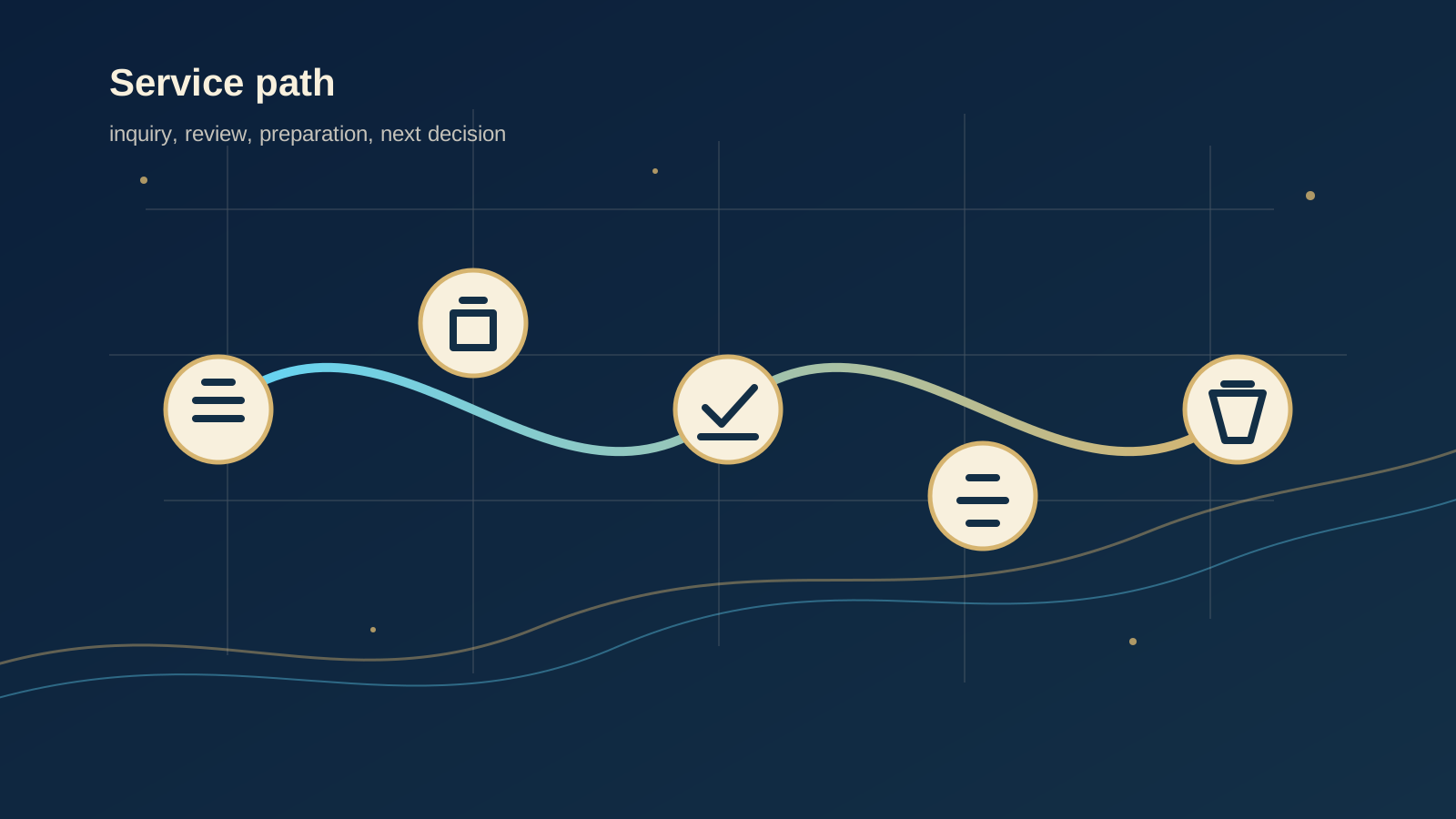
The training planning path connects international AI training, campus talent cultivation, enterprise process improvement, and industry-academia PoC planning.
Review target roles, current AI maturity, data exposure, internal risks, and decision goals.
Decide whether the next step is DLI training, manager briefing, process preparation, or a focused PoC.
Map learning outcomes to practical AI exercises, data boundaries, model limits, and internal review habits.
Plan how teams continue after the class: office hours, PoC planning, knowledge capture, or process design.
Decision Prep
Training planning is not only course registration. It should clarify participants, learning outcomes, PoC topic intake, and follow-up evidence before the team moves into implementation planning.
Who needs training: executives, managers, engineers, marketers, operations, or internal AI champions.
Current AI usage, data restrictions, security rules, policy concerns, and process pain points.
Whether the goal is awareness, hands-on capability, PoC definition, or process preparation.
Outputs
The first output is a decision package: what to do next, what evidence is missing, who should own it, and whether the topic is ready for a proposal, grant, training plan, or PoC.
A practical current-state review of capability, risks, training needs, and next-step priority.
A recommended sequence for manager briefing, hands-on training, team practice, and PoC preparation.
A shortlist of practical topics that can be evaluated after the first session and turned into a focused pilot later.
Timeline And Boundaries
Review target roles, AI maturity, data, and desired outcomes.
Suggest DLI, briefing, hands-on workshop, or PoC planning sequence.
Move from learning into scoped pilot topics, process preparation, or governance planning.
Consultation Prep
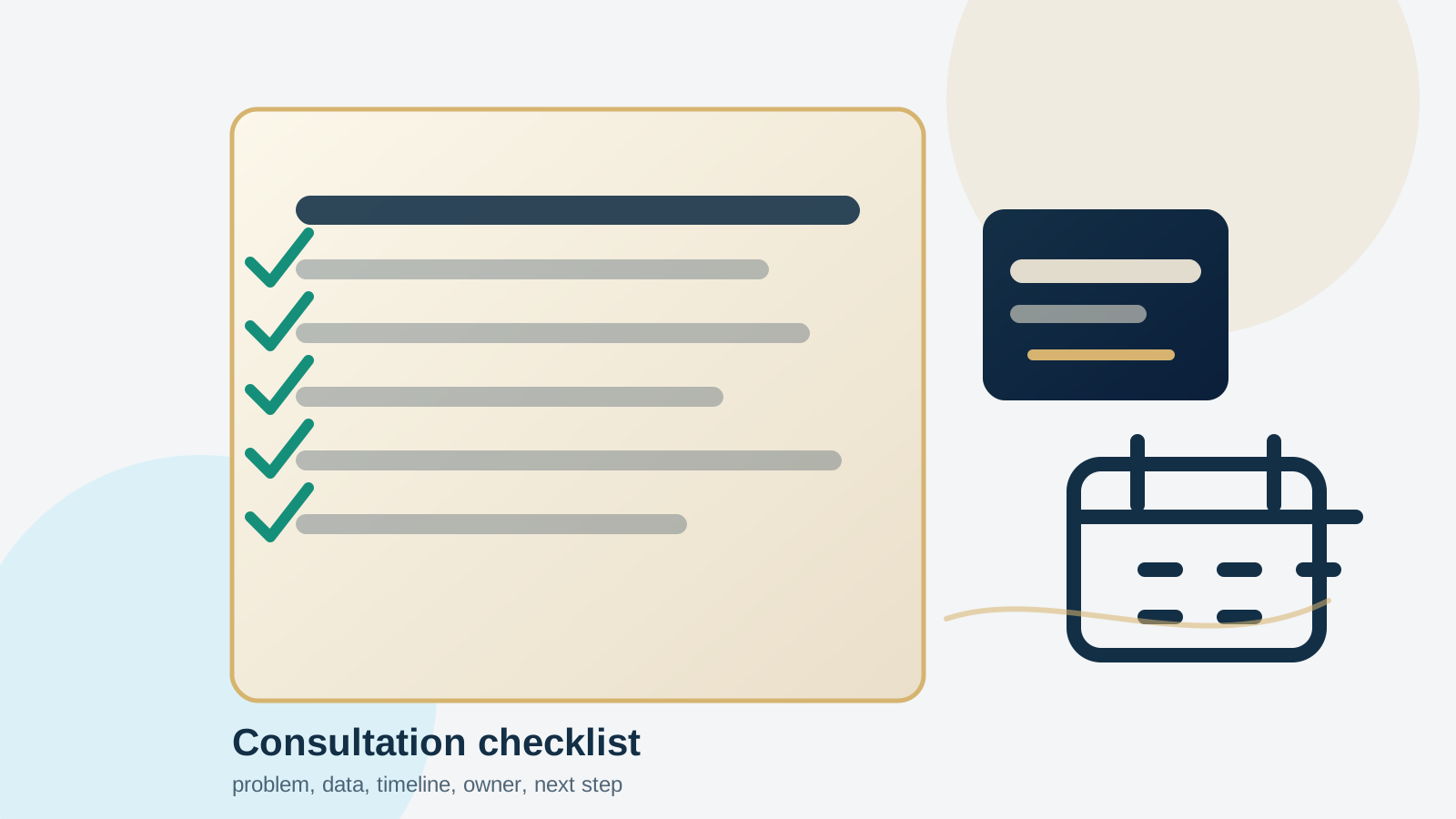
Prepare target roles, participant count, current AI usage, data restrictions, expected outcome, and whether the team needs training, PoC design, or process preparation first.
Who needs training: executives, managers, engineers, marketers, operations, or internal AI champions.
Current AI usage, data restrictions, security rules, policy concerns, and process pain points.
Whether the goal is awareness, hands-on capability, PoC definition, or process preparation.
Share the target team, current AI maturity, available datasets, and PoC goal. In-Stars will decide whether the next step is DLI training, process preparation, knowledge planning, ERP process review, or an industry-academia PoC.